Review: Happy Birthday Card SVG for Embroidery Projects
As a designer who spends more time staring at stitch simulations than I do sleeping, I approach every new machine embroidery design with a healthy dose of skepticism. We have all been there: you download a file that looks crisp on the screen, only to find it turns into a bird's nest of thread once it hits the fabric. That is why I took a close look at the Happy Birthday Card – SVG Cutting File before committing it to any client work or personal embroidery project. While this asset is marketed primarily as a 3D SVG for paper crafting and Greeting Cards, its bold geometry and clean lines make it a fascinating candidate for textile applications, provided you know how to handle the translation from vector cut files to stitched art.
First Impressions: Geometry Meets Celebration
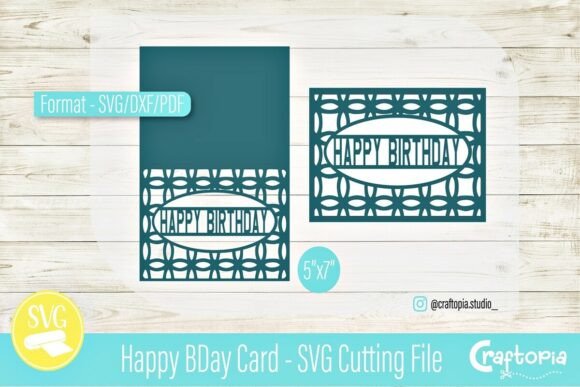
The first thing that strikes me about this design is its structural confidence. The "Happy Birthday" text is rendered in bold capital lettering, framed within a decorative oval featuring interlocking loops and geometric accents. In the world of digital cutting, these sharp angles and continuous lines are perfect for cardstock. However, for an embroiderer, this layout signals specific challenges and opportunities. The mood is undeniably festive yet structured; it avoids the overly cursive, floppy scripts that often plague birthday designs in favor of something more architectural.
This visual personality suggests that the design belongs on items that need to make a statement without feeling cluttered. It feels modern and slightly retro, fitting well within current boutique trends. When I visualize this as a finished product, I see it working best where high contrast and clear definition are key. The interlocking loops offer a great opportunity to play with thread colors, potentially using a satin stitch for the frame and a dense fill stitch for the lettering to create texture variation.
Real-World Application: The Custom Tote Scenario
To truly test the viability of this design, I imagined a real-life scenario common for many Etsy sellers and craft business owners: a custom order for a reusable birthday tote bag. A customer wants a durable, washable alternative to a paper card, something they can use to carry gifts or party favors.
If I were to adapt this digital embroidery file for a canvas tote, the bold lettering is a major advantage. Unlike thin script fonts that get lost in the weave of canvas or twill, these block letters would hold up beautifully. The geometric oval frame provides a natural boundary, keeping the design contained and professional. For a small shop product like this, the design offers immediate recognition. A customer seeing this on a shelf or in an online printable mockup would instantly understand the purpose of the item.
However, since this is originally an SVG cutting file, using it for sweatshirt embroidery or apparel requires careful preparation. You cannot simply load an SVG into most embroidery machines. You would need to digitize it properly, converting those cut paths into stitch types. The geometric accents might need to be simplified to prevent excessive jumping or trimming. If done correctly, though, the result on a fleece hoodie or a structured cap could be stunning, offering a personalized gift that feels far more premium than a standard store-bought item.
Navigating Fabric Textures and Stitch Density
One of the critical factors in evaluating any design is how it interacts with fabric texture. The bold nature of this design makes it versatile, but it is not without limitations. On smooth, tightly woven fabrics like broadcloth or high-quality polyester blends, the sharp corners of the geometric accents should stitch out cleanly. However, if you are attempting this on a textured towel or a looped terrycloth, those fine details in the interlocking loops might get swallowed by the pile.
Stitch density is another consideration. Because the original file is designed for cutting, the lines are likely single-path vectors. When translating this to embroidery, you must decide between a running stitch outline or a wider satin column. For a custom apparel piece like a t-shirt, a lighter density is preferable to maintain drape. Conversely, for an embroidered patch intended to be ironed onto a jacket, you can afford a higher density to ensure durability and a plush feel.
I would advise caution when working with stretchy fabrics. The rigid, geometric oval frame does not have much give. If stitched directly onto a jersey knit without proper stabilization, the design could pucker or distort after the first wash. This is where the choice of stabilizer becomes non-negotiable. A cut-away stabilizer would be my go-to recommendation here to preserve the integrity of those sharp geometric corners over time.
Commercial Viability and Brand Consistency
For commercial embroidery professionals and creative entrepreneurs, the value of a design lies in its ability to elevate brand perception. This design exudes a sense of reliability and cheer. Using it for holiday embroidery collections or birthday bundles could help standardize your product line. It looks consistent whether it is small on a napkin or large on a pillow cover.
Customer trust is built on quality execution. If the tiny details in the loops break or the lettering fills unevenly, it reflects poorly on the maker. Therefore, testing is essential. Before offering this as part of a handmade product line, I would run tests on scrap fabric in both light and dark colors. High-contrast testing is vital; a design that looks great in black thread on white fabric might vanish if you try white thread on a navy blue sweatshirt unless you add a underlay or backing.
Practical Notes for the Smart Designer
If you plan to incorporate the Happy Birthday Card – SVG Cutting File into your workflow, keep these practical steps in mind:
- Digitization Check: Remember that this is an SVG. Ensure you have the rights and software to convert it into a usable embroidery file format compatible with your machine.
- Hoop Size Verification: Measure the aspect ratio of the oval. While it looks compact, the width might require a larger hoop than expected, especially if you plan to add names or dates below the main graphic.
- Corner Integrity: Pay special attention to the sharp points in the geometric accents. In embroidery, sharp corners can cause thread buildup. You may need to adjust mitering settings during digitizing.
- Licensing Clarity: Since this is sold as a cutting file, double-check the license terms regarding commercial use for stitched goods. Some creators allow cutting for sale but restrict embroidery resale.
- Mockup Testing: Create black-and-white mockups first. If the design relies solely on color to define the interlocking loops, it might fail in monochrome stitching.
In conclusion, while the Happy Birthday Card – SVG Cutting File originates in the paper crafting world, its bold, geometric DNA translates surprisingly well to textiles for the savvy designer. It is not a plug-and-play solution for embroidery without some technical adaptation, but for those willing to put in the digitizing work, it offers a stylish, versatile asset for creating memorable baby embroidery items, chic tote bag designs, and high-value design assets for your shop. With the right fabric, stabilizer, and stitch strategy, this design can move from a digital vector to a cherished physical keepsake.