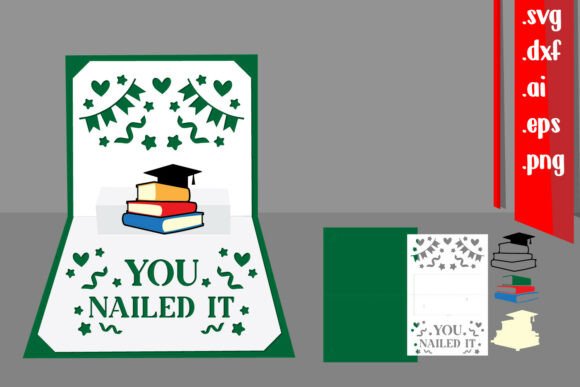
Reviewing the 3D SVG Graduation Double Slider Card
As a brand designer who spends most of my week refining small business branding for local artisans and boutique owners, I am always on the lookout for unique graphic design assets that can elevate a product's shelf presence. Recently, I evaluated the Graduation Double Slider Card SVG not for its intended use as a greeting card, but as a potential structural and visual element for a high-end local bakery launching a "Class of 2024" cupcake line. My first impression was immediate: this is not just a flat illustration; it is a piece of engineering disguised as art. The mood it creates is undeniably festive yet sophisticated, suggesting a brand personality that values interaction and surprise. For a local business looking to stand out in a crowded market, this asset feels premium, playful, and mechanically intriguing.
Transforming Interactive Mechanics into Packaging Design
The core appeal of the Graduation Double Slider Card SVG lies in its dual-action mechanism. While traditionally used for paper crafts, I immediately saw its potential in packaging design. Imagine a custom box for a skincare brand releasing a limited-edition graduation gift set. By adapting the slider concept, we could create a window reveal on the box front, allowing the customer to slide a tab and uncover a hidden message or a special discount code. This transforms a static product label into an experience. The 3D SVG nature of the file ensures that the lines are crisp and scalable, which is critical when moving from a digital screen to a physical die-cut template.
For handmade business owners, particularly those selling candles or soaps, this asset can be repurposed as an elaborate hang tag. Instead of a standard rectangular tag, the slider mechanism can hold a "scent reveal" or a care instruction card that slides out. This adds a layer of tactile engagement that fosters a stronger emotional connection between the consumer and the brand. It signals that the brand cares about the unboxing experience, which is a huge driver for social media shares and customer loyalty.
Strategic Applications for Visual Hierarchy and Brand Identity
Incorporating the Graduation Double Slider Card SVG into a broader brand identity requires thoughtful placement. It works exceptionally well as a hero graphic on seasonal campaign visuals. For a florist creating a bouquet arrangement for graduation season, this design could serve as the central motif on the wrapping paper or the accompanying thank-you card. The intricate details of the slider mechanism draw the eye, establishing a clear visual hierarchy where the celebration of achievement takes center stage.
When used in social media graphics, the static image of the slider invites curiosity. A social media manager could create a short video reel demonstrating the sliding action, using it as a backdrop for promotional ads. This dynamic content performs better than static images, driving higher engagement rates. Furthermore, for web design and email marketing, elements extracted from this SVG design can act as decorative dividers or interactive buttons, adding a touch of whimsy to digital communications without overwhelming the user interface.
Where to Exercise Caution in Commercial Design
Despite its versatility, the Graduation Double Slider Card SVG is not a one-size-fits-all solution. I would advise against using it in formal corporate branding where minimalism and strict adherence to brand guidelines are paramount. The mechanical complexity of the design can clash with the clean lines required for luxury minimalist brands. Additionally, caution is needed when applying this to very small labels or ingredient-heavy layouts. The fine lines of the slider mechanism may lose definition when scaled down too far, leading to printing issues or visual clutter.
It is also crucial to ensure that the decoration does not compete with important text, such as legal information or net weight statements on a product mockup. In editorial design or dense informational flyers, this asset should be used sparingly as an accent rather than a background pattern. Low-contrast backgrounds can also diminish the impact of the intricate cuts, so it is best paired with bold, solid colors or high-contrast textures.
Practical Notes for the Professional Designer
Before integrating this asset into a client project, there are several technical steps I recommend. First, always test the Graduation Double Slider Card SVG on real packaging mockups. Digital renders can sometimes hide issues that appear in physical production. Check the design in black and white to ensure the structural lines remain distinct without relying on color cues. This is vital for cost-effective printing options like thermal labeling or single-color stamping.
Preview the asset on small labels to gauge legibility. If you are a packaging designer working with a Canva template or vector software, inspect the SVG design for editability. Ensure that the paths are closed and ready for die-cutting if you plan to produce physical cards. Compare the style with competitor packaging to ensure your client's brand stands out rather than blends in. Test the graphic beside various typography styles—serif fonts for elegance, sans serif for modernity, or script fonts for a personal touch—to find the perfect balance.
Finally, and perhaps most importantly, confirm the commercial license before using it for client work or physical product sales. Many creative marketplace items have restrictions on the number of physical units produced. Ensuring you have the right commercial design rights protects both you and your client from legal complications. When used correctly, this digital product becomes more than just a clipart illustration; it becomes a strategic tool for professional branding that enhances product recognition and delivers a memorable customer experience.